

Small Wedding Ideas That Actually Feel Like You
There's a version of a wedding that gets talked about a lot — the 150-person venue with the open bar and the five-tier cake, and then there's the version more and more couples are choosing more intimate wedding, quieter, more theirs.
Small weddings aren't a compromise. At their best, they're the clearest possible expression of what a couple actually values: the people who matter most, a setting that means something, food worth eating, and photographs they'll want to look at for the rest of their lives. No filler, no obligation tables, no spending money on things neither of you wanted in the first place.
If you're drawn to the idea of a smaller celebration, whether that's 30 guests in a restaurant back room, a backyard ceremony with your closest people, or just the two of you somewhere beautiful — this guide is for you.


First: What's the Difference Between a Small Wedding, a Micro Wedding, and an Elopement?
These terms get used interchangeably, but they mean different things in practice.
Small wedding: Generally 30–75 guests. Has most of the traditional elements: ceremony, dinner or reception, dancing, just scaled down. Feels intentional rather than limited.
Micro wedding: Usually under 30 guests, sometimes under 20. Often includes just immediate family and your closest friends. Every person in the room is someone you genuinely love. The intimacy is the point.
Elopement: Traditionally just the two of you (and maybe a witness or two). No guest list, no seating chart, no speeches. In the modern sense, it can mean anything from a spontaneous courthouse ceremony to a planned, photographer-documented adventure in a beautiful location, just without the crowd.
None of these is better than the others. They're just different expressions of the same instinct: to make the day feel real.
Why Couples Choose Smaller Weddings
The reasons vary, but a few come up again and again:
The finances are real. The average wedding in the US in 2026 costs $30,000-$40,000, and even more in metropolitan cities like NYC. A significant portion of that is driven by guest count: every person you add means another seat, another meal, another drink, another favor. Cutting your guest list from 150 to 50 doesn't just trim the edges; it fundamentally changes what's possible with your budget.
The day actually feels like yours. At a 200-person wedding, you spend most of the night being passed around. At a dinner for 25, you actually get to sit with people, have real conversations, and be present for the whole thing.
The photos are better. Smaller gatherings create more intimate moments, more genuine emotion, and less chaos to shoot around. Some of the most beautiful wedding photographs come from the quietest, smallest celebrations.
You skip the things you maybe didn't want anyway. No one who chose a micro wedding has ever said "I really wish we'd had assigned seating for 18 tables".


Small Wedding Ideas by Setting
At Home or in a Backyard
One of the most personal options, and one of the most genuinely beautiful when done thoughtfully. A backyard wedding doesn't mean casual unless you want it to. String lights, rented tables and linens, a borrowed arch, or a simple floral installation can completely transform an outdoor space. Things to think through: parking logistics, a rain plan, local noise ordinances if you're having music, and whether your home's layout can handle the flow of a ceremony into a reception.
At a Restaurant
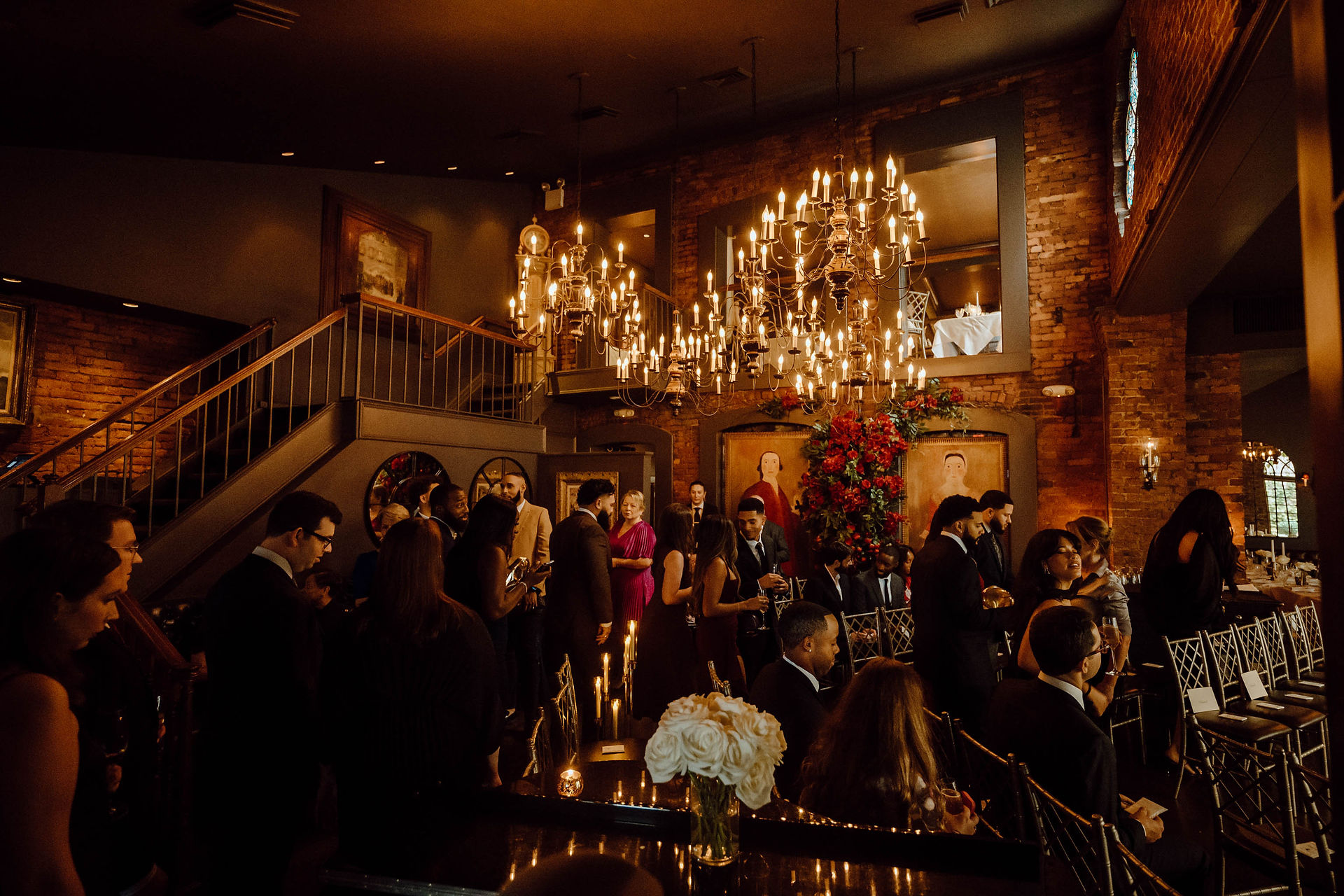
Buying out a restaurant for the evening — or reserving a private dining room — is one of the most underused small wedding ideas out there. You get built-in ambiance, professional food service, and staff who handle the clearing and resetting. For 20-40 guests, a restaurant buyout often costs less than a traditional venue while delivering a far better dining experience. Look for restaurants with private rooms first; then consider those that offer full buyouts on slower nights (Sunday through Thursday).
In a Public Park or Garden
Parks and public gardens offer some of the most beautiful ceremony settings anywhere — and permits are usually a fraction of what a venue charges. Depending on your location and the park, you might pay anywhere from $50 to a few hundred dollars for a ceremony permit.
The tradeoff is logistics: you'll need to think about chairs, an officiant with a permit, sound (if any), and a rain backup plan. But for the right couple, a meadow or garden ceremony with a restaurant or private space for dinner afterward is an incredibly lovely combination.
At a Vacation Rental
Airbnb, Peerspace, Giggster, and VRBO have event-friendly listings, search specifically for that filter. A rented house with a good outdoor space can function as ceremony venue, reception space, and accommodation for out-of-town guests all in one. For a 20–30 person gathering, this can be both beautiful and genuinely cost-effective. Confirm with the host that events are welcome, understand any noise or guest-count limits, and check whether you'll need additional event insurance.
At a Small Cultural Venue
Libraries, art galleries, botanical gardens, historic buildings, and museum event spaces often have intimate rooms available for events, and the built-in character means you spend very little on decor. Many of these spaces are booked through a venue rental department and are far less competitive than traditional wedding venues.




How to Cut Costs Without It Showing
The most impactful places to save aren't the obvious ones.
Guest list first. This is the lever that changes everything else. Every guest represents a meaningful cost across catering, seating, and venue capacity. You don't need a reason to keep your list small: wanting an intimate day is reason enough.
Date and day of week. Saturday in peak season is the most expensive version of every vendor. Friday evenings, Sunday afternoons, and weekdays in the off-season (November through March, outside of holidays) often come with meaningfully lower pricing across photographers, caterers, and venues, sometimes 10-20% less.
Skip what doesn't photograph, get remembered, or feed anyone. Generic wedding favors, elaborate printed programs, custom cocktail napkins, and chair covers are the first things to cut. Nobody will notice they're gone.
Food format matters more than food quality. A beautifully presented family-style dinner costs less to serve than an identical plated dinner, because it requires fewer servers. Cocktail receptions cost even less and often feel more social. A brunch or lunch wedding is dramatically cheaper than an evening one without feeling like anything was cut.
Flowers: seasonal and focused. Rather than florals everywhere, choose one or two moments where flowers make a real impact: the ceremony backdrop, the tables, and keep everything else simple. Seasonal blooms cost a fraction of out-of-season ones. Greenery-heavy arrangements are elegant and budget-friendly.
DIY stationery. Canva has genuinely good wedding templates, and the free version is capable. For RSVPs and logistics, a free wedding website through Zola does everything a printed invitation suite used to do, for a fraction of the cost.


What Not to Cut
This is where most budget guides fall short, they'll tell you to cut everything without acknowledging that some things matter.
The photographer. Your photos are the only part of the wedding that exists after the day is over. A smaller wedding actually needs a better photographer, not a lesser one, because the moments are quieter and require more skill to see and capture. This isn't the place to save money. Find a photographer whose style genuinely fits yours and whose work you love even in the difficult light of an indoor venue or the chaos of a candid moment.
The food. People remember whether they were fed well. It doesn't have to be fancy, it has to be good. A beautiful family-style dinner with simple, seasonal dishes will be discussed. Mediocre catering at any price point won't be forgiven.
The officiant. A ceremony that feels personal and genuine sets the tone for everything. Whether that's a friend who gets ordained, or a professional officiant who takes time to learn your story, it's worth spending a little here.


A Note on Elopements
If reading all of this still sounds like more than you want — if the truest version of your day is just the two of you somewhere meaningful — an elopement is a complete answer, not a lesser one.
Modern elopements look nothing like the word used to suggest. They're planned, intentional, often photographed beautifully, and sometimes followed by a separate celebration with family. They happen on mountaintops, on beaches, in city halls, and in small chapels. What they share is a quality of presence that's hard to manufacture in a larger setting: the feeling that the day was entirely, unapologetically yours.
If you're weighing a small wedding against eloping, the honest answer is that neither is wrong. The question is which one lets you actually be in the moment — and which one, looking back, will feel like the right story.
Frequently Asked Questions
How many guests is considered a small wedding? Most people consider 50–75 guests a small wedding, with micro weddings typically under 30. But the definitions are loose — what matters more than the number is the feeling. A wedding of 40 people where every single person is someone you love is intimate. A wedding of 80 where half the list was obligatory is not.
Can a small wedding still feel special and celebratory? Yes — and often more so. The intimacy of a smaller gathering tends to produce more genuine emotion, more real conversation, and more presence from everyone involved. The most memorable weddings are rarely the biggest ones.
How much does a small wedding cost? It varies enormously by location and choices, but a small wedding of 20–40 guests can realistically be done for $10,000–$20,000 with thoughtful decisions. A micro wedding or elopement can cost significantly less, or the savings can be redirected toward higher quality in the areas that matter most to you.
Is a small wedding tacky or considered rude to guests? No. The people who love you will understand a small guest list, especially when you communicate the reasoning with warmth. "We wanted something intimate" is a complete sentence. Most guests at small weddings report feeling genuinely honored to be included.
What's the difference between a micro wedding and an elopement? A micro wedding is a planned, intimate celebration with a small guest list (typically under 30 people) that includes ceremony and some form of reception. An elopement traditionally involves just the couple (and perhaps a witness or two), often with no guests at all. In practice, the line has blurred: many modern elopements are planned and photographed, just without a guest list.
How can I cut wedding costs without having a cheap wedding? Focus on what matters most: the vibe, the experience, and the memories. Ditch what’s expected, and invest in what makes the day meaningful.
What are the top 3 things to cut for a cheaper wedding? Venue, catering, and bar service. These are often the biggest ticket items, and where strategic choices can save you thousands.
Are there truly free or cheap wedding venues in NYC? Yes! Think outside the box: public parks, rooftops, libraries, and backyards. You’d be surprised how stunning they can be with a little effort.
How do I keep my wedding reception classy on a small budget? Use candles, minimal florals, focus on greenery, thrifted glassware, and personal touches like DIY favors or playlists. Classy is a feeling, not a number.
When should I book vendors if I’m planning a budget wedding? Book early! You’ll lock in better rates and avoid peak prices. Prioritize your non-negotiables, like your photographer (hi 👋), planner, and venue.
Planning a wedding in NYC doesn’t mean you have to spend a fortune. As you can see, there are plenty of cheap options that show you how to cut wedding costs. So, go for the budget-friendly alternatives when you can, and spend more on the things that don’t come with other options. That way, you can create the wedding of your dreams!
Planning a small wedding specifically in New York City? We go deep on NYC-specific venues, permits, and City Hall options in our NYC wedding guide.
All The Feels by Mucci is a boutique photography studio based in New York City, specializing in couples, elopements, and intimate weddings. If you're planning something small and want photographs that feel as real as the day itself — get in touch.

Comments